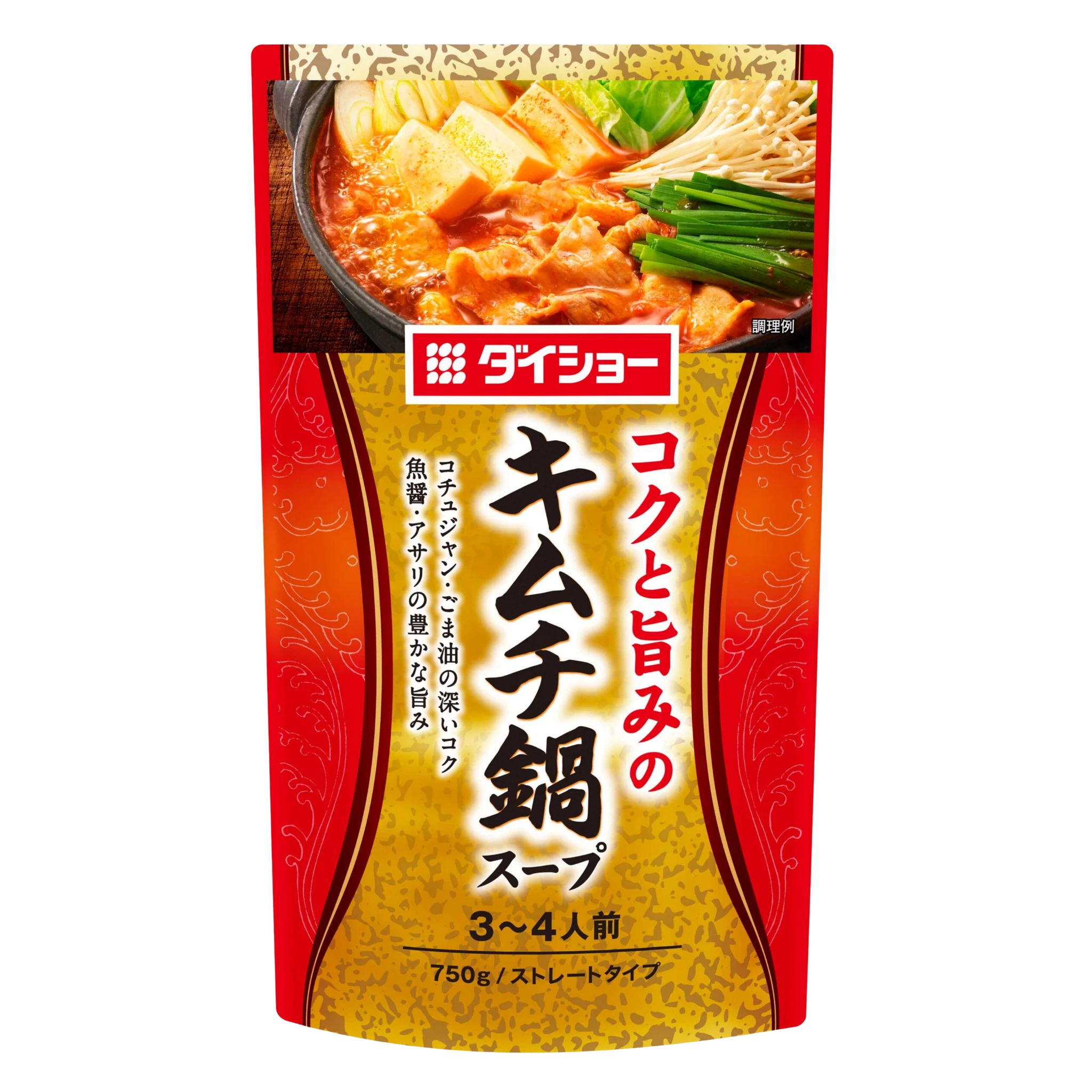
Daisho Kimchi Nabe Hot Pot Soup Base 750g is a ready-made broth for kimchi nabe — the kimchi-flavoured version of Japan's table-top hot pot. Daisho builds it on the depth of gochujang, adds the sharp heat of doubanjiang and red chilli, then rounds it out with garlic and sesame oil and the savoury weight of fish sauce and clam. It is a straight-type soup — it goes into the pot as it is, with no diluting. One 750 g pouch makes a pot for three to four people.
About Daisho
Daisho Co., Ltd. (株式会社ダイショー) is a Japanese seasoning maker established in December 1966 in Fukuoka — originally as Daisho Foods, set up to make grilled-meat seasoning, and its very first product was a yakiniku sauce called Yakiniku Ichiban. It now works from dual headquarters in Tokyo and Fukuoka, and is known across Japan for yakiniku and steak sauces, seasoned salt-and-pepper, and nabe hot-pot soup bases, under the company motto "creating happiness through deliciousness".
What is kimchi nabe?
Nabe is Japan's table-top hot pot: a pot of seasoned broth sits over a portable burner in the middle of the table, and meat, tofu and vegetables go in a few pieces at a time so everyone helps themselves straight from the pot as each item finishes. Kimchi nabe is the version built on kimchi's chilli-and-garlic character, which makes it one of the warming, spicier options in the nabe repertoire.
How to use & enjoy
Heat the soup in the pot and add ingredients in stages, cooking them in the broth while everyone serves themselves at the table. Typical partners for a kimchi nabe are sliced pork belly, tofu, napa cabbage, mushrooms such as enoki or shiitake, and Japanese leek or garlic chives. When the pot is nearly finished, the seasoned broth left behind is traditionally turned into a shime course — simmered with rice into a zosui-style rice soup, or with noodles such as udon.
How to make kimchi nabe — Daisho's recipe
For three to four people the maker lists 300 g of thinly sliced pork, a quarter of a napa cabbage, one Japanese leek, a bunch of garlic chives, a bag of enoki mushrooms, a block of tofu and the whole pouch of soup, noting that beef, chicken, meatballs, bean sprouts or extra kimchi all work as substitutions. Shake the pouch well, pour the soup into the pot and bring it to the boil, then add the meat. Once it returns to the boil, lower the heat to medium, skim the surface, and add the firm stems of the cabbage along with the leek, enoki and tofu; when those are cooked through, add the cabbage leaves and the garlic chives, bring it back to a simmer and it is ready.
Daisho's own tip for a deeper pot: fry the sliced pork together with about 200 g of kimchi in sesame oil first, then add that to the soup.
Ingredients
Gochujang (produced in Japan), soy sauce, doubanjiang, salt, sesame oil, garlic, fish sauce (seafood), apple juice, kimchi extract, pork extract, fermented seasoning, red chilli pepper, clam extract / seasoning (amino acids etc.), thickener (xanthan gum), paprika colour.
Allergens
Contains: crustacean (prawn, crab), fish, mollusc (clam), wheat, sesame, soy. The manufacturer additionally declares pork and apple. For the allergen declaration as printed for the Australian market, please refer to the product packaging.
Nutrition (per serving, 214 g — as printed by the manufacturer)
- Energy: 45 kcal
- Protein: 2.1 g
- Fat: 1.3 g
- Carbohydrate: 6.0 g
- Salt equivalent: 4.6 g
Important — please check the package label
While we make every effort to keep product information accurate and up to date, manufacturers may change formulations, packaging, allergens, ingredients, or specifications without notice. The actual product packaging is always the authoritative source. If you have specific concerns about allergens, ingredients, or any product detail, please contact us before purchase, or refer to the product packaging before consuming.
Japanese kimchi hot pot soup base · キムチ鍋スープ 750g · Daisho nabe range.